Marvel, AI Companions and Dead Loved Ones

AI companions carry a lot of moral and social responsibility that we might not be ready for

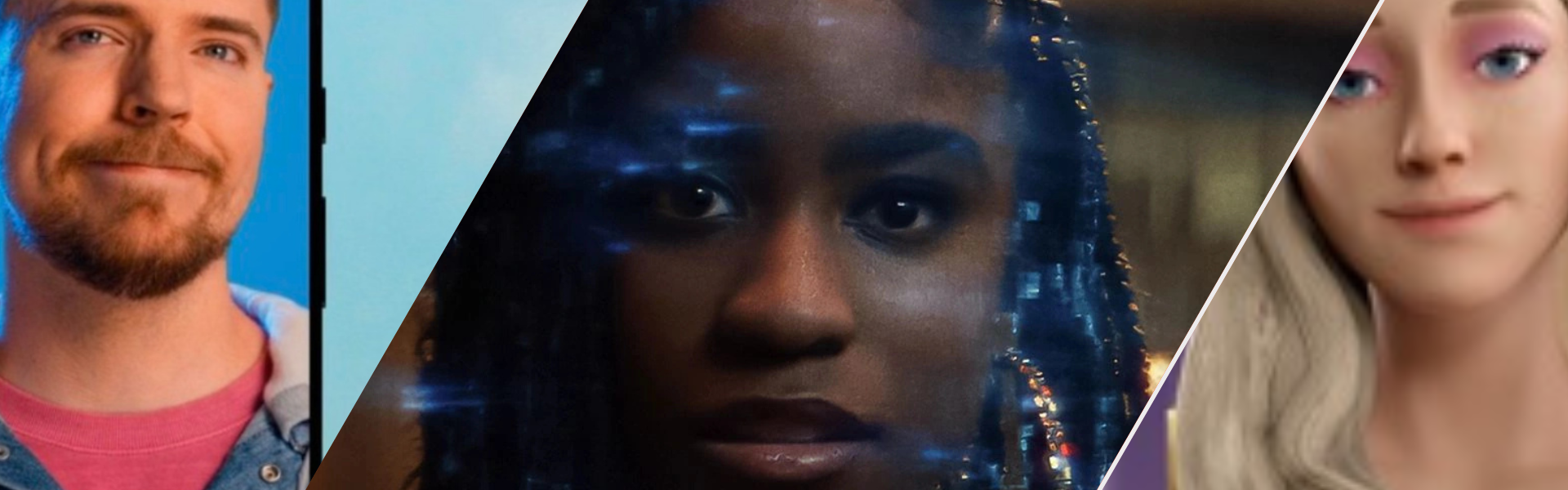
Just last weekend, I was able to finish Marvel’s Ironheart Disney+ series, and as soon as I was done watching it, something immediately stuck with me. It wasn’t how surprisingly good the show is (though it really is, go watch it), or the fact that what should be a show about the high tech corner of marvel ended up feeling like a Doctor Strange sequel. Instead it was about how the show brought up and tackled the concept of AI-based copies of a real person, more notably a dead loved one. Only for it to dawn on me that this isn’t the first show or movie to do this, and in fact, in the sci-fi world, the concept of an AI acting like a real person who was once alive is quite common. That’s why in today’s burgeoning AI age, so many people want to bring that to life, but real life has shown it to be a much more complicated task, that probably shouldn’t be done at all.
Ironheart and N.A.T.A.L.I.E.
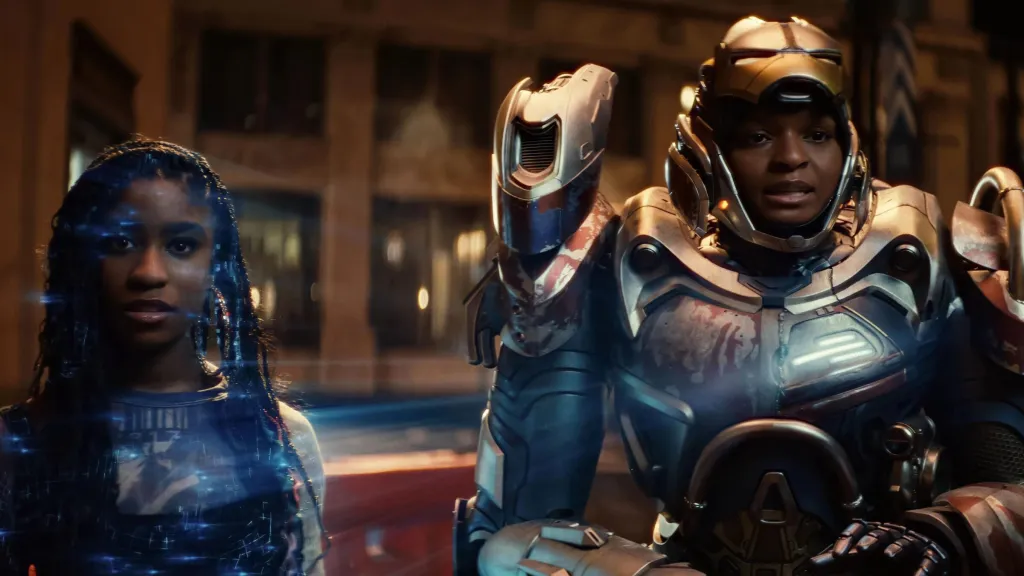
Now, minor spoilers for the show here, but just like in the comics, Ironheart shows main character Riri Williams using an advanced AI for her suit that is heavily based on her dead best friend Natalie, using an acronym of the same instead. The show makes N.A.T.A.L.I.E’s creation a bit of a technological miracle/mistake on Riri’s part, something she didn’t mean to make happen and on some level clearly didn’t want, but very soon grows to loving, as the human Natalie’s death, along with Riri’s dead step-dad are essentially the driving forces and emotional crux of her story throughout the show. This makes Riri clearly different from the likes of the original Iron Man, as obviously while he loved and cared about J.A.R.V.I.S., F.R.I.D.A.Y., or any other AI he used in his suits, they were never an emotional or psychological crutch, coping or therapeutic mechanism like N.A.T.A.L.I.E. is for Riri in this show.

And the show is smart enough to show that while N.A.T.A.L.I.E. may be good for Riri, her mere existence may not have the same effect on everyone else in Riri’s life, most notably N.A.T.A.L.I.E’s own brother Xavier or Riri’s mother, who rightfully questions that if Riri can recreate her dead friend as an AI, why not her dead husband/Riri’s stepfather. It already shows the slippery slope that such creations can have, and how AI recreations of real people are a very direct case of “Just because you could, doesn’t mean you should”. Unfortunately the show essentially ends on a middle-of-the-road stance about the matter, as it is a superhero show and we’ll, there’s superhero stuff to do by that point, but N.A.T.A.L.I.E’s significance is not diminished, if anything it’s only amplified by that point, even if the how’s stance on the issue isn’t resolved.
The Real Life Equivalents
Now this would all be an interesting premise on its own if we were just talking about a fun, thoughtful sci-fi premise that makes one question the nature of humanity but well, in case you haven’t checked, we now live in a world where AI friends, girlfriends/boyfriends, influencers, work companions and yes, replicas of real people, now exist. Literally, today you can go on certain apps or websites that solely exist to interact with AI products meant to well, make you feel things. Be that feeling happy, sad, nostalgic or melancholy, they’re all there to make you experience feelings you would ordinarily want another person to make you feel. Companies like Character AI are essentially built on this, though they focus specifically on fictional characters, while other apps like Replika blur the line between a completely fictional character and an AI chatbot somewhat based on someone you know.

Even Meta in recent years ,has shown off virtual influencers based on real people like Lionel Messi or LeBron James (who would have agreed to license or sell their likenesses, of course). However, once chatbots or other AI products start to replicate lost loved ones and people who are dead in general, it becomes a very dicey minefield. And honestly, this shouldn’t be a surprise to anyone. Almost every single human culture and individual human being understand the how and why of death being sacred, and how nothing should be done to impose on the sheer memory of that person, as all that’s left is their memory and how they are remembered by those they left behind. Except now someone decides to take those memories and create an incomplete AI copy of them, that no matter how complex of course, will never replace the real person, but also in many ways could be said to desecrate the memory of a dead person. This is because by definition, they are essentially adding to said memory, adding to an otherwise complete record of how we remember something or in this case, someone. The worst part about that is that they add to said record but aren’t even the original person, which again, is a whole Pandora’s box of issues in itself. For example, if an AI chatbot of your dead father starts insulting you about things your own father would never say, what’s to say that insult doesn’t affect the person reading it deeply? Even if they know it’s from a chatbot. Grief bots in South Korea and products like Project December are already facing a lot of flak from the general public and even health boards for whatever mistakes they make since they deal with such sensitive topics, and while their apologies seem sincere, these companies don’t seem to aim to stop anytime soon. All of which might make you wonder why so many companies keep making such products (besides the money of course). After all, people clearly think some of this is going too far, so why are so many AI companies determined to create such products? Well, the answer is still Hollywood.
Science Fiction often inspires Science Fact…even when it shouldn’t

You see, what Ironheart as a whole made me realise, however, is that while this show bothers to grapple with the murkiness of AI copies of real people, other media have treated this like a normal thing for decades now. The easiest example to bring would be Superman, and at least half the projects appearing on TV or movie screens since the 1970s, where there is often some copy of his father’s consciousness on an alien crystal in his Fortress of Solitude. That copy of a consciousness is basically a very advanced AI copy of his father, which essentially is there to guide him in every major version of the character except in the latest movie.

The Matrix: Resurrection has the controversial plot point of a “revived” Morpheus who is now a computer program, essentially serving a similar role but being on the other side of the human-machine conflict. The show Upload has humans at the point of mastering a digital afterlife, where rather than risk heaven or hell, they upload their minds onto computer servers run by multiple companies in the real world, where they can be accessed and talked to by their loved ones. All of this to show that actually, you can’t really blame these companies when at least the past 50 years of media gave them this idea. However, while we can’t blame them for having the idea, we can definitely reject it as a lot of these products are designed to prey on some of the weakest aspects of the human condition. Feelings like loneliness, grief, shyness, and various forms of mental health disorders or even addictions are now being targeted by companies that want to make a quick buck from the AI boom and specifically make products meant to feed the negative feelings of so many. This is why in Western countries parents are already campaigning for age restrictions to be put on such products, as they could seriously affect the social and emotional growth of young kids.

Now we don’t think there’s no place for say, an AI counselor in society, but it’s hard to say AI-powered dead relatives or something more weird or depraved are really what society can benefit most from right now. Hopefully, laws around the world catch up to that reality, because if not, there may be a lot of scary ramifications in the not-so-distant future.

And as for Ironheart, well, perhaps I spoke too soon when I claimed the show takes no stance about such complex AI issues. That’s not true. Because if you know about its ending, you likely know how that implies a very strong stance, and one that arguably warns of the dangers of AI replicas of dead people better than anything I wrote here. Let’s hope that’s enough to make people listen.
Related Stories:

Windows’ Secret Comeback Part 2 : RTX Spark, AI Dev Tools, XPS 13 for $600
LL Cool J Voice: Don't Call it a Comeback!!
Read More

OnePlus ISN’T Dying. But it’s definitely changing.
For Better or For Worse If there’s any topic in...
Read More
EcoCloud is the latest embarrassment in a trend of “unfinished” Zimbabwean Software
How are we not past this still?
Read MoreAbout Author