
Managing money in Zimbabwe is a lot like managing cash in a mobile game

It sounds crazy but it’s true..

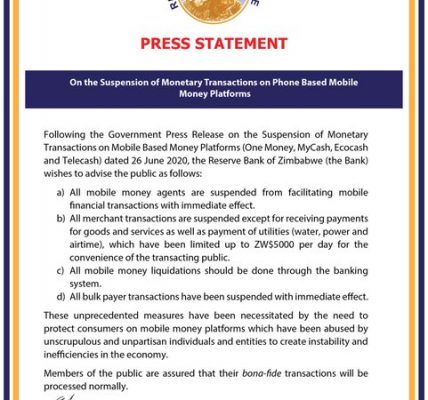
Surviving in Zimbabwe’s economy is what many would consider an extreme sport. In fact the phrase “Zimbabwe’s Economy” is one that could conjure up a million thoughts, phrases, think pieces and books based on who you say it to and the level of their vocabulary. as such, we’re not going to dive into studying Zim’s Economy as a whole, there’s far more people who have done that already in much finer detail and with much better advice to give. Instead I noticed something strangely odd as of late. When it comes to managing personal finances, managing money In Zimbabwe is a lot like trying to manage “funds” or “currencies” in the mobile game, and not in any of the good/fun ways.
/cdn.vox-cdn.com/uploads/chorus_image/image/60954051/Screen_Shot_2018_08_20_at_9.57.50_AM.0.png)
Now if you’re wondering how I even got to making such a comparison(or if I’ve lost my mind), allow me to explain. The modern day mobile game is usually what many call a “free-to-play money pit”, and what that means is most of the popular mobile games in the world right now tend to follow a free to play model, where it’s free to get the game on the App Store/Play Store, and its free to start playing the game, however you’ll realize very soon that for you to get the full experience of the game, or at least a more enjoyable playing experience, you have to pay for some game features, be they the ability to play a level again, to unlock new characters/cosmetics or specific boosts or perks especially pertaining to in game currencies. It’s that last part that I’ll focus on most because you realize soon enough that if you play mobile games often, be it Candy Crush, Asphalt, Call of Duty Mobile and more, you’ll realize for you to truly progress in the game (unlock new levels, characters, skins etc) you often have to manage a lot of these in-game currencies, and it’s specifically that whole currency management loop that’s remarkably similar to managing your cash in Zim.
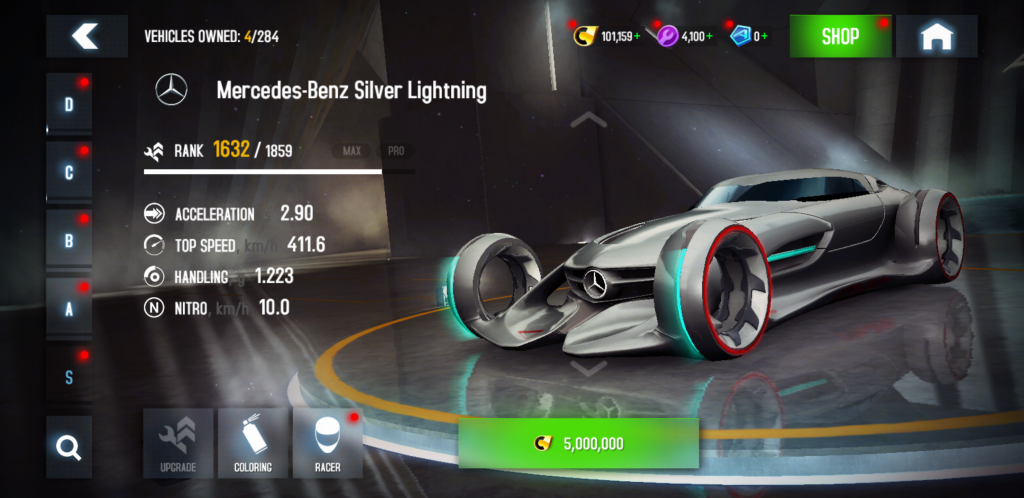
To make all this clearer, I’m going to use a game some of you may be familiar with : Asphalt 8: Airborne. Other games can apply here as well but I chose asphalt due to my familiarity with it along with its currency system lining up perfectly with how money in Zim works right now.

The game has 3 main currencies: The golden basic credits, the purple Fusion Coins, and the blue colored Tokens. I’ll be calling the latter two purple and blue coins for both our ease while I’ll call the golden credits just credits because I wouldn’t want them getting confused with our (far more valuable and prestigious) actual gold coins, which also have an equivalent in the game. Now if you take these 3 currencies and try to equate them to our own money situation, you basically end up here:
- Credits = EcoCash/ Bank RTGS : usually the easiest to obtain and most common form of currency, general value depreciates all the time due to the real world/in-game economy and you need a crazy amount of it to buy anything of value.
- Purple Fusion Coins = Bond notes: slightly higher in value due to local economics, more viable than the preceding currency but can’t exactly be used everywhere. End up being used for specific uses.
- Blue Token = USD: most valuable general currency in the game, and has a rate that changes all the time in comparison to the other 2.
There’s other currencies and exceptions of course but the basic rules here hold up. The general credits have the lowest value, tend to be the easiest to obtain, can be used in the most situations and lose value the most just like RTGS/Mobile money. Even now Ecocash’s rate against even Bond notes is $200-300 more against the USD.

This is why the purple coins can be classified as bond notes, they don’t have much higher value than credits, but they can be useful for specific purchases in game that make the experience better like boosts in performance and customization for your car.

This is similar to how bond notes are the best option when taking public transport or buying vegetables at a flee market for example. However just like credits and RTGS, you’ll probably need quite a lot of them to buy anything significant, and in that case using credits or RTGS might be easier as they’re more easily obtainable.

And finally we get to our USD equivalent, the blue Tokens. They have the most value, can buy the best cars and perks in the game, and the other two currencies basically shift their value based on blue tokens . They’re also the hardest to obtain, something the average Zimbo can definitely equate to USD and ironically, you can use actual USD to buy these , with a whole system there that essentially warrants another deep dive.

But basically that’s the system, and it’s crazy how that in-game economy matches ours almost perfectly. Even more amusing (or frightening depending on your take) is how the game’s in-game economy has had it’s own “inflation” and multiple currency rebalances that have affected the pricing, rates and accessibility of all the game’s cars as well. Due to this being a mobile free to play game these changes were obviously made to optimize how the game can make actual money , but just like Zimbos aren’t fans of how our economy runs, very few Asphalt players tend to like a lot of these shifts, because unless you can horde blue tokens akin to Zimbos hoarding USD, you shouldn’t be surprised if a car that went for 80,000 credits in the game will be 500,000 credits after a major update.

The question is however, if the similarity between managing money in Zim and in mobile games could teach us how to “hack the system” in either or both cases. After all in either status quo we tend to feel like the economy is manipulated so a select group of people can make more money right? So how do we make that work in our favor? Well I’ll start by saying this, it’s obviously not an apples to apples comparison. As unfair as Asphalt and other mobile games can feel to play, Zimbabwe is still…….well Zimbabwe. In other words, it can feel a lot more unpredictable and unfair, gold coins or otherwise(which by the way , can be equated to Golden Tickets in Asphalt). That being said, a few simple adages for managing funds can be helpful. For example, in Asphalt, I’ve learnt to reserve specific uses for specific currencies, barely allowing crossover between them just so I don’t mess up the balance of one because of another. Applying the same as much as possible with your actual cash is obviously a simple rule to follow, even if inflation will constantly challenge it.

On the flip-side my classification of credits as RTGS often leads me to spend those the most, because of course they never retain value for long. Another thing I’ve learnt is that both in-game and in Zim a lot of this stuff has “seasons” basically. There are times when spending USD will be a bargain, but a lot of the time that may not be the case, certain scenarios can even favor having a lot of RTGS too. But of course always reading the situation and understanding what to spend and when is key, and that’s a mental exercise that’s ongoing, regardless of it’s necessity. At least now you know why everyone hates free to play game models, especially as they’ve left mobile games and their mechanics have infiltrated a lot of the biggest games on the planet (FIFA Ultimate team and Fortnite for example), you can understand the plight of many a gamer. Now imagine being a gamer and Zimbabwean at the same time!

But hey, maybe more of us will figure out both of these systems and crack the code on mastering mobile games and Zim. I know I certainly need that to happen. But either way, the fact that there’s this much crossover between the two is already as amusing as it is frightening. Here’s to hoping both situations become better, somehow.
Related Stories:

Windows’ Secret Comeback Part 2 : RTX Spark, AI Dev Tools, XPS 13 for $600
LL Cool J Voice: Don't Call it a Comeback!!
Read More


OnePlus ISN’T Dying. But it’s definitely changing.
For Better or For Worse If there’s any topic in...
Read More
EcoCloud is the latest embarrassment in a trend of “unfinished” Zimbabwean Software
How are we not past this still?
Read MoreAbout Author