

Same Processor, similar cameras, and there’s still a notch…hmmm
Let's kick it off with Apple's "entry level" flagship, aka the iPhones that most people are probably going to buy. The regular iPhone is basically doing the opposite of last year, offering a normal 6.1 inch iPhone 14, and the new, 6.7 inch iPhone 14 Plus, as opposed to another mini iPhone like the 13 and 12 had. It's a bit of a loss. After all mini iPhones made at least some of us wish for mini Android Phones (and seemingly only Asus listened), but the move is understandable. Big, cheaper phones sell really well, and Apple trusts that line of thinking so much they'll happily sacrifice the iPhone Mini while not making the regular iPhone 13 any smaller (a bit of a missed opportunity if you ask me). Unfortunately beyond the 2 sizes, these new iPhones might not offer too much of a change over the past 2 generations. Don't get us wrong, there are changes, but many of them seem like tweaks rather than huge steps forward. The biggest change is probably the screen. Now being the same Retina XDR display in the iPad Pro, it's going to be really bright and really vibrant too. It's peak brightness of 2000 nits also makes it really attractive for reading in direct sunlight. A quality of life change that we can all get behind. However the bigger features probably stop there. The cameras are both still 12MP, with larger apertures meaning better low light performance, essentially a similar move to the Galaxy S22. Apple did add a new "Photonic engine" feature that's essentially a much better algorithm for its deep fusion computational photography features. This does likely mean better photos, but how much better is definitely something that will have to be viewed with further inspection.

As for other new features? Well here’s the least impressive one, these phones have the same processor as last year’s iPhone 13 series. More specifically the higher GPU versions in 13 Pro and Pro Max. If you’re thinking “that’s a rip-off”, you wouldn’t exactly be wrong. After all it basically means the performance of especially the base iPhone 14 and base iPhone 13 likely won’t be that different. Sure Apple probably made a few enhancements so that the new model is a little faster, but I’m not crossing my fingers for anything crazy here. It kind of makes one a little surprised that the regular 14 doesn’t start a little lower though. After all screen aside it’s a very similar phone to the 13. But then again with Apple only pricing said 13 at $700 now, it’s not exactly like Apple plays fair about these things anyway.
Specification | iPhone 13 Mini | iPhone 13 | iPhone 14 | iPhone 14 Plus |
OS | iOS 16 | iOS 16 | iOS 16 | iOS 16 |
Display | 5.4-inch OLED | 6.1-inch OLED | 6.1-inch OLED | 6.7-inch OLED |
Always-on display | No | No | No | No |
Refresh rate | 60Hz | 60Hz | 60Hz | 60Hz |
Peak brightness | 1200 nits peak brightness (HDR) | 1200 nits peak brightness (HDR) | 1200 nits peak brightness (HDR) | 1200 nits peak brightness (HDR) |
Resolution | 2340 x 1080 | 2532 x 1170 | 2532 x 1170 | 2778 x 1284 |
Dimensions (mm) | 64.2 x 131.5 x 7.65 | 71.5 x 146.7 x 7.65 | 71.5 x 146.7 x 7.80 | 78.1 x 160.8 mm x 7.80 |
Weight (grams) | 141g | 174 | 172.00 | 203.00 |
Color options | Green, red, pink, blue, starlight/cream-colored white, midnight/navy blue | Green, red, pink, blue, starlight/cream-colored white, midnight/navy blue | Light blue, red, starlight/cream-colored white, midnight/navy blue | Light blue, red, starlight/cream-colored white, midnight/navy blue |
Battery | Up to 17 hours video playback | Up to 19 hours video playback | Up to 20 hours video playback | Up to 26 hours video playback |
Processor | A15 | A15 | A15 | A15 |
Storage | 128GB, 256GB, 512GB | 128GB, 256GB, 512GB | 128GB, 256GB, 512GB | 128GB, 256GB, 512GB |
Ports | Lightning port | Lightning port | Lightning port | Lightning port |
Rear camera | Dual-camera system / 12-megapixel main camera, 12-megapixel ultrawide | Dual-camera system / 12-megapixel main camera, 12-megapixel ultrawide | Advanced dual-camera system / 12-megapixel main camera, 12-megapixel ultrawide | Advanced dual-camera system / 12-megapixel main camera, 12-megapixel ultrawide |
Front camera | 12MP TrueDepth front camera | 12MP TrueDepth front camera | 12MP TrueDepth front camera with autofocus | 12MP TrueDepth front camera with autofocus |
Biometrics | Face ID | Face ID | Face ID | Face ID |
Water and dust protection | IP68 | IP68 | IP68 | IP68 |
SIM support | SIM and eSIM | SIM and eSIM | eSIM only (in the US) | eSIM only (in the US) |
Satellite-based Emergency SOS | No | No | Yes | Yes |
Crash detection | No | No | Yes | Yes |
Wireless charging? | Yes | Yes | Yes | Yes |
Connectivity | 5G / Bluetooth 5.0 | 5G / Bluetooth 5.0 | 5G / Bluetooth 5.3 | 5G / Bluetooth 5.3 |
Starting price | $599 | $699 | $799 | $899 |
The actual saving grace of the iPhone 14 series seems to be a couple of safety and disaster aide features that Apple is trying to implement across iPhones and partially across Apple watches this year. The first big one is satellite messaging, which Apple was probably going to have claim to as the company to first do it if Huawei hadn’t just beat them to it a few hours prior. This feature allows you to contact an emergency station or rescue personnel when you’re in an area without network coverage through directly connecting to an orbital satellite.

Apple has even made a full app to help a user find the correct position of the satellite in the sky, and created a purpose built protocol to transmit smaller messages and faster due to satellites having far more limited bandwidth. They’ve even gone one step further and put up their own relay centers and staff for when a rescue station only takes calls, so that Apple receive your emergency message ad relay that to the rescue personnel as a call. It’s a pretty concerted effort, especially considering the amount of investment that will especially go into the satellite equipment part, and we have to admit it’s pretty great. Now If only it didn’t only work in the US and Canada. The next big feature is Crash detection, which will be available for not just the iPhones but all of Apple’s 3 new Apple Watches as well.
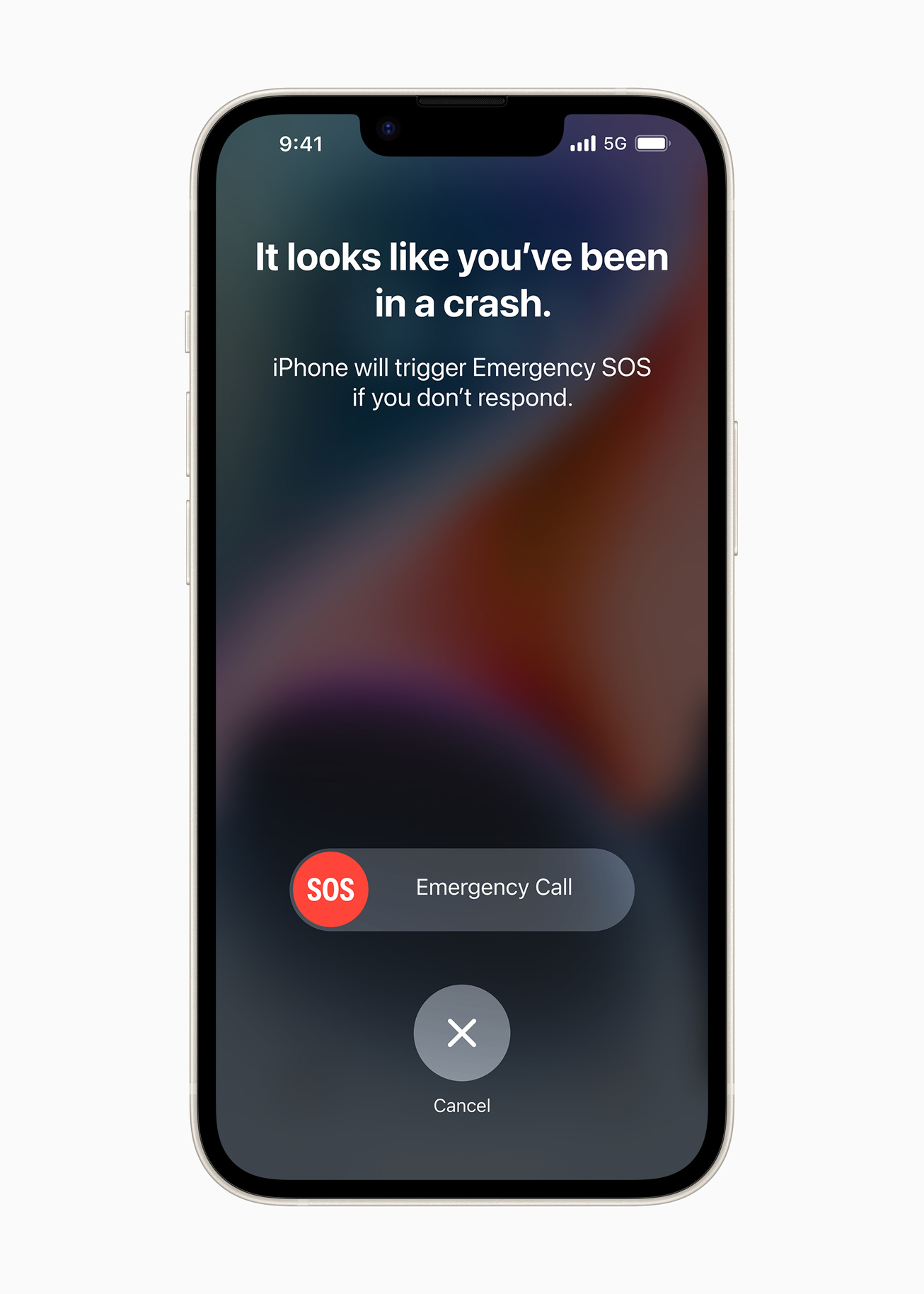
It essentially uses 2 sensors to , microphones and some trained algorithms to detect when there has been changes in air pressure, sound and position that could hint at a car crash, then alerts an emergency service center as well as your loved ones. It’s also a pretty great feature. My only gripe with it(like other emergency features on any phone) is allowing a user to state what counts as an emergency number in their country, because often the stated numbers for the US or Europe just straight up don’t work here. Either way it could prove to be a useful feature in an emergency, even if we hope no one here has to use it.

The last big change of the iPhone 14 phones? You might this a little disconcerting but well, Apple is removing the sim card from it’s phones. At least in the US. From now on all iPhones in the US will only come with an eSIM option, completely doing away with physical SIM cards. Now to be fair, even I don’t think this is the biggest deal, eSIM has been a long time coming and even here in Zim Econet at least supports the eSIM option. And as said, this only really applies to US iPhones, though that means for those of us who love to import or buy imported models we should probably check whether it has a physical SIM slot or not. If not, well hopefully you’ll be an Econet subscriber, because you might have a slightly harder time of things otherwise. The business brain part of me also thinks this makes it much harder for anyone buying a locked iPhone 14 in the US to unlock it, as usually that process might unlock a phone’s hardware capability to read other SIMs , but now there’s an extra software layer to it as well. YouTube’s MKBHD even went a step further to say it would definitely be an extra step in keeping an iPhone user stuck to Apple’s Ecosystem as well, as the process of trying to transfer eSIMs might prove horrendous when moving to an Android. There’s a lot to unpack there, but we’ve babbled enough for this article.

So what do we think of the iPhone 14 and 14 Plus at the moment? Honestly, here it’s far less impressive than it was even last year. We’re sure they’ll be fine phones to use, and by the time reviews come out we’ll have more info on whether any of their slight upgrades actually count as an upgrade. But outside of the regular 14 and it’s bigger screen (better screen too) and bigger battery, I don’t see why these regular iPhones are worth buying. Especially when they don’t have neither the new , “notchless” screen of this year’s Pro Models with the “Dynamic island” , or even last year’s screens with 120Hz. It’s enough to make me think buying a 13 Pro or Pro Max , considering you do get said 120Hz screen and cameras that are still better due to a telephoto lense. But of course people differ. And as we said before people love a big , cheaper screen, which is exactly why the 14 Plus will likely sell like hotcakes. We just wish said hotcakes came with a lower price or at least a dynamic island.
Related Stories:
Ecocash Super App Review: Why is Ecocash a social media app now?
You have to check your EcoCash DM's now?
Read More
Did Google Win the AI War? You’re asking the wrong question.
"Winning" in AI is a little more complex than you...
Read More
Apple’s developer conference this year showed the company’s confusing state in 2025
It's not a fall off...but it is a little messy
Read More
For Almost Three days, Ecocash’s Mastercard Issues left InDrive Drivers Stranded
Even letting Omari swoop right in for the win...
Read MoreAbout Author