
Fake news has just gotten FAR more Dangerous for Zimbabweans.

Well this is scary…

At the time of writing this, there is a news article spreading around Facebook and other Meta-based platforms based on Advocate and Political associate Fadzayi Mahere. The article seems to be from The Herald and states how Miss Mahere is earning thousands of dollars a day through a trading platform called Netherex Pro, supposedly funding her “luxurious lifestyle”. This article, however, is completely fake. It is not published by The Herald (or ZimLive, which is somehow also cited as an author here), and it is instead a completely fake article that is aimed at recruiting Zimbabweans to use Netherex Pro , which is all a scam unto itself. This article proves one thing, however. Fake news has become far more dangerous, and now regular Zimbabweans are in its crosshairs.

Now before we dive further into this, we understand that this fake article is based on a politically associated individual and some of you may already be ready to throw your opinions on how you feel about her or that you even believe the article. But please note: none of that matters here. Because not only does TZP always choose to remain a politically neutral platform for information and objective discourse, usually about technology, but this specific issue is dangerous because of how targeted it is in capturing the average Zimbabwean’s attention and coming up on their social media feed. Again, I personally came across this article on Facebook, while looking for a hard drive on Marketplace no less. A close associate saw a similar ad on their Instagram, and both led to the same article. An article that, unless thoroughly double-checked, could easily pass off as one from the Herald, as this website outright copied the Herald’s design and even provides some locally relevant names to seem real. The article has a Paul Nyathi interviewing Miss Mahere, while it was even written by Simon Muchabaiwa, who apparently claims to be from ZimLive though this is supposed to be a Herald article (one of the first signs that this is likely a false article). Neither of these individuals seems to exist in the journalism space, and the article uses multiple old photos of a 2022 ZiFM radio interview to make it seem like there were pictures of the interview.
The article, of course, is not stored on the Herald’s website or any of their associated domains, but rather a coinbase.ru domain with so many sub-folders it seems it was designed to be a little harder to track. And yet the average person may not notice this due to how the article springs for your attention.

It even has clickbait phrases like “Fans advocate for Mahere release after controversial interview” or “Mahere didn’t know the microphone was on” all to draw one’s attention. It’s earlier parts even seem like a legitimate interview between Mahere and Nyathi. And again, unless you are specifically checking for mistakes or points of contention in this, you may not even think it’s fake until you reach the part about Netherex Pro. And that is where all the danger is. This article seems convincingly real at first, and even if it falls off a little later, it is likely convincing enough for many a reader to still think it’s real. Think about it this way, if your older, distant relative from a small town or rural area read this, would they think it’s a lie? More importantly, what would stop them from wanting to join Netherex Pro, which, based on our research, is not only a scam, but could be an outright malware program as well. So not only could a reader be fooled into believing a completely made up story, but now they may be signing up for a scam that could mess up their device as well.

And to be fair, fake news has existed for years, and even on social media it’s rampant to the point where some people fact check everything as second nature. But typical Facebook stories or posts don’t have this level of research behind them. They don’t have a fake version of The Herald or accurate images of the person in question along with fake names to corroborate the story (the page even has a comment section with people seeming shocked by the story). This all hints at whoever is behind the article using AI to create it, as nowadays AI web editors can copy another website’s design in minutes while also being able to scrape relevant information about a person or topic enough to quickly come up with a story about them, one that could catch the attention of a local. It would be mildly impressive if it doesn’t raise a very clear issue: Zimbabweans aren’t safe from the rest of the web anymore.
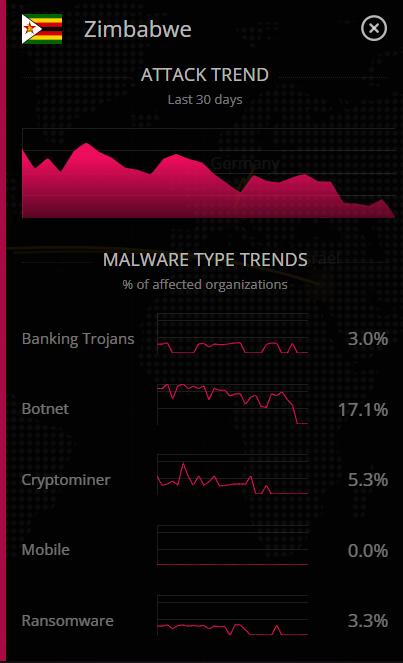
Now I know a cybersecurity pundit is going to retort “We were never safe!” and bring up how our country has always been behind in such areas, but there is one thing that I feel many a Zimbabwean have never realized has protected us from the rest of the internet’s dangers: anonymity. That and to be fair the ignorance of everyone else out there. Zimbabwe being a nation everyone else forgot about allowed most of us to surf the web completely free and never really in danger of anyone preying on us because no one cared and not many really knew about us or what we had. But now in a world where more of us are online and quite a few buy or sell things online, have remote jobs or are into activities like forex trading, malicious actors are starting to take notice. In the same way big corporations have been experiencing hacks or data breaches over the past few years, we should all be wary of an age where more of us will be approached by scammers, tracked by hackers or have our data misused by data brokers.
Even more so, with articles like this now existing, it essentially means we all have to be on the lookout for more incidents of fake news, because trust me, they will be coming. Whether from cybercriminals like the two accounts we’ve seen advertising this article or just from goofy clickbait clowns on social media who will post anything to get views and engagement, especially in a time where again, AI makes it much easier to corrupt the truth and spread lies even quicker. It makes the whole concept of “News” much less concrete and solid, as if the truth itself doesn’t exist and is malleable enough for someone to just change or play with whenever they want. It even causes some philosophical thoughts for a person like me writing THIS article, which technically another person might just disband as fake news as well one day. But regardless of all that, all I can tell you all is to be careful out there. This first article was just the start, and likely more will be coming, so always double check your sources and make sure they are the ones you can truly trust. We hope that perhaps we will be one of those sources as well. Stay safe out there!
(PS: Yes, both times we have seen the ad on Meta platforms we reported them, but we are unsure if they are still showing on the platform. The Netherex Pro website is still online, however.)
Related Stories:


An in-depth look at a WhatsApp Cybersecurity Scam affecting Zimbabwe
How it works and how to protect yourself from having...
Read More

To POTRAZ and the Ministry of ICT: Stop trying to swindle people and make real money through investing in ICT.
Newsflash: You run the Ministry, use it to create actual...
Read More

Ecocash and Bank card scams are increasing in Zimbabwe! Here’s how to avoid them.
How do we know this? Because we almost got scammed...
Read MoreAbout Author