
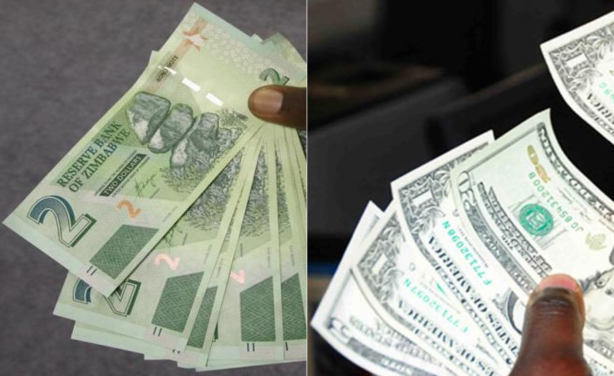
The Zim dollar Reintroduction in- depth break-down

A closer look at all this…
Quick Disclaimer. The Zimbabwean perspective is not a business or financial analytics site. Not exclusively that is. Our tagline alone reads that we care more about the lives of Zimbabweans and the tech used in them. But the first part about Zimbabwean lives means we couldn’t keep quiet about the Zim dollar situation. We know other news outlets have also covered this same issue and we are glad they did, but we figured we would have our own look into it, and here it is:
On the 24th of June 2019, the Minister of Finance and Economic Planning, Professor Mthuli Ncube announced that the Zim Dollar would now be the only legal tender within the country. This means that you can no longer use USD, Euros, Rands etc, for transactions within the country, it is not illegal to own such currencies, however it is illegal to use them to buy goods and services within the country. That is reserved for the Zim Dollar i.e. bond notes, RTGS$
Not surprisingly this announcement was met with mixed emotions as people were undecided on whether this was the right move for the country or not. Of course, to understand this better, we need to take a look at the reason provided by the Minister for this move. In a video broadcasted all over the news and on social media, Professor Mthuli Ncube points out country that the country was “self-dollarizing” meaning that a majority of consumers and producers were naturally settling for using the USD for their transactions as opposed to the Bond notes. This situation, unfortunately, made things rather difficult particularly for the large majority that receive their salaries in RTGS$. If the commodity they want is charged in USD they couldn’t obtain it at all, or they could at least obtain it after exchanging their bonds to USD at a high rate on the black market. By reintroducing the Zim Dollar, all good prices will be in one currency allowing everyone to be able to access or afford them.
Of course, this sounds good on paper but as was noted recently, goods prices have soared. A major reason being, a lot of these stores need to import their products so to compensate whatever costs they might incur, they pass them on to the consumer in the form of high prices. There is, however, the opinion that all these price hikes are being done out of panic and that once the smoke clears, prices will indeed begin to drop. Some even say the recent increase in the demand for bond notes and RTGS$ can be taken as a signal that the value of the bond is moving in the right direction. Unfortunately, this isn’t true. The increase in demand of the bond is simply reflecting the reigning law of the land i.e. only bond notes and RTGS$ can be used as legal tender. It is not reflecting an increase in the bond’s value. That’s something to keep in mind.
The reintroduction of our own currency in itself isn’t a bad thing at all because a multicurrency regime isn’t exactly the ideal scenario. However, in our opinion, the country isn’t ready for that step. In an interview with local YouTube reporter, Ruvheneko, Professor Ncube said the right time to introduce a domestic currency would be “when we think the fundamentals are right, or when something is going off the rails, that one way to deal with it is to introduce a full domestic currency.” For a currency to have any real value at all it has to be backed by a strong productive economy. This is one of the key fundamentals (if not the most important one) that is almost always being mentioned during conversations about our own currency. Unfortunately, Zimbabwe does not have that yet. We are still largely an importing country due to the fact that a lot of our own industries are down. The low production capacity makes the value of our currency really meagre and without some sort of economic revival, the value might continue to depreciate. Bearing this in mind, it could be safe to say that the domestic currency was wholly reintroduced to deal with the problem of “self-dollarization” and not because the fundamentals are now in place.
There are also justified fears that once we begin to print our own money, we could be headed back to the hyperinflationary levels of 2008. The use of currencies that are not our own played a significant role in shielding us from the overprinting of money within the country. If we do begin to print our own currency, we would definitely need to have quantifiable preventative measures put in place to guard against the overprinting of money.
Ultimately, moving forward economic resuscitation procedures have to be a major priority for the Minister of Finance and the rest of his team. Whether it be subsidies, lower taxes etc. they have to find some way to encourage local producers to export more goods whilst at the same time encouraging domestic consumption. By doing so, the reintroduced currency may see itself headed towards stability.
About Author